
A real challenge.
A reason to act.
A useful integration gets information where it’s needed, at the right moment.
The team copies data between tools.
Information is duplicated or arrives late.
You need to connect processes without losing control.
What we work on.
We start from your operation to define the technical scope, dependencies and controls the solution needs.
Connected systems.
Shared data.
Data moves between tools through rules, validations and exchange points. Every connection has a purpose and an owner.
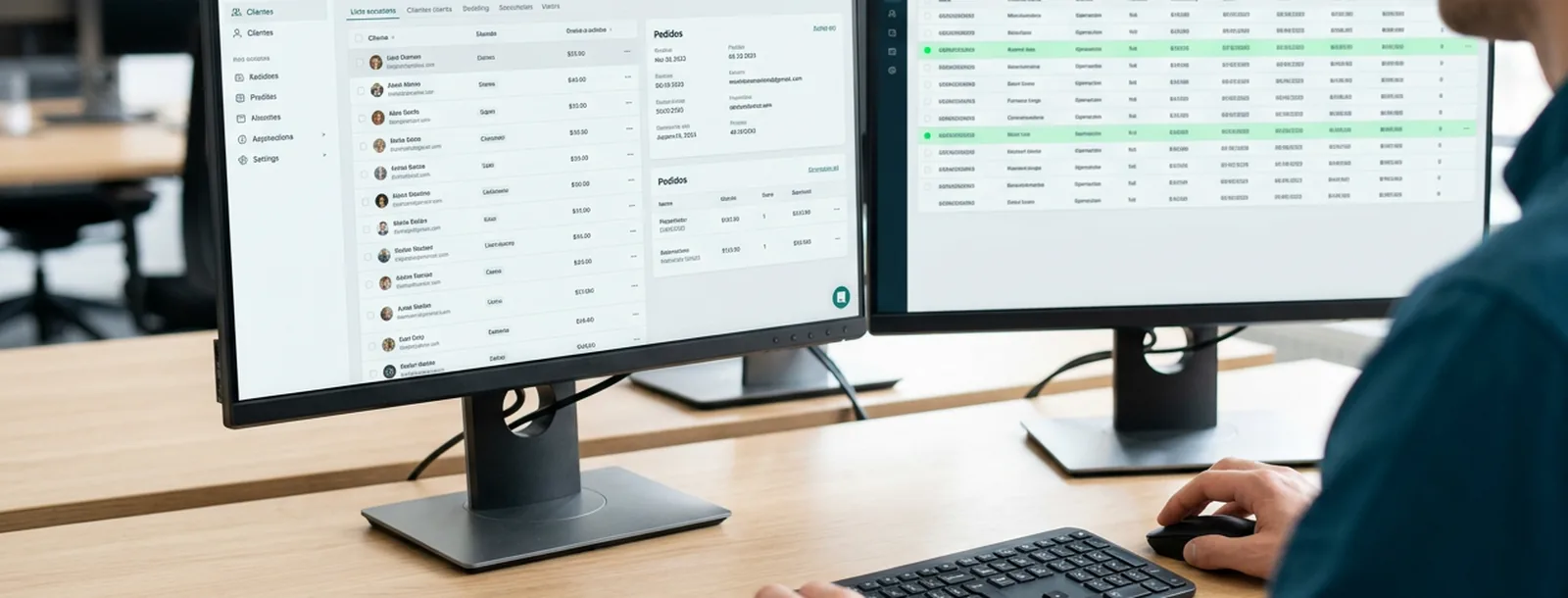
Conceptual integration example; the specific tools are defined with your team.
Data sources
We identify where each piece of data originates, which system maintains it and who needs to use it.
Business rules
We agree on what must happen at each step: validations, permissions, transformations and handling of exceptions.
Exchange points
We define the connections between tools, their dependencies and how to detect failures so we can step in.
Good work.
Concrete results.
Connected workflows, visible rules and an operation the team can follow.
Defined deliverables so your team can take the next step.
What you get
Integration map
Automated workflows
Operational monitoring
The scope and format are agreed at the start of the project.
Clear steps.
A shared course.
You know where we are, what we’re working on and what comes next.
01
Understand
We map processes, tools and requirements with the people who use them.
02
Build and validate
We work in stages and check behaviour in agreed scenarios.
03
Operate
We document usage, owners and the path to keep evolving.